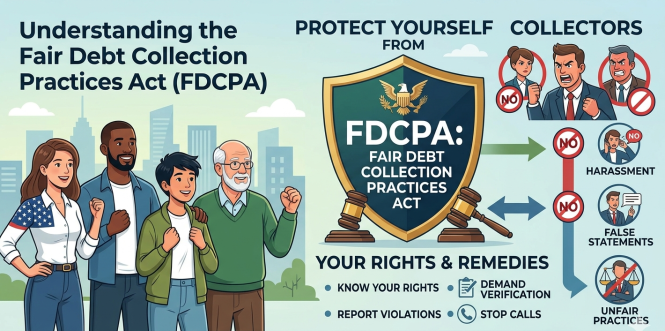
When you borrow money, it’s important to understand your rights as a consumer. The Fair Debt Collection Practices Act (FDCPA) is a federal law that protects consumers from abusive debt collection practices. If you’re a newbie in online money borrowing, it’s essential to understand how the FDCPA works and how it can protect you.
What is the FDCPA?
The FDCPA is a federal law that regulates the behavior of debt collectors who are attempting to collect debts on behalf of a creditor. The law applies to personal, family, and household debts, including credit card debt, medical debt, and car loans. The FDCPA was enacted in 1977 to protect consumers from abusive debt collection practices.
What does the FDCPA cover?
The FDCPA covers a wide range of debt collection practices, including:
- Harassment: Debt collectors cannot use threatening or abusive language or make repeated phone calls to you.
- False statements: Debt collectors cannot make false statements about the amount you owe, the consequences of not paying, or their legal authority to collect the debt.
- Unfair practices: Debt collectors cannot take or threaten to take any action that is not legally allowed, such as seizing your property without a court order or adding unauthorized charges to your debt.
- Misrepresentation: Debt collectors cannot misrepresent themselves or their company, and they cannot pretend to be attorneys or government officials.
What are your rights under the FDCPA?
As a consumer, you have several rights under the FDCPA, including:
- The right to dispute the debt: If you believe that the debt is not yours or that the amount is incorrect, you have the right to dispute the debt in writing within 30 days of receiving the initial notice from the debt collector.
- The right to request validation of the debt: If you request validation of the debt in writing within 30 days of receiving the initial notice from the debt collector, they must provide you with written verification of the debt, including the amount owed and the name of the creditor.
- The right to request that the debt collector stop contacting you: If you ask the debt collector in writing to stop contacting you, they must stop (with a few exceptions, such as to inform you that they are ceasing collection efforts or to sue you).
- The right to sue a debt collector: If a debt collector violates the FDCPA, you may be able to sue them for damages, including actual damages (such as emotional distress) and statutory damages (up to $1,000).
What should you do if a debt collector contacts you?
If a debt collector contacts you, it’s important to take the following steps:
- Ask for their name, the name of their company, and their address.
- Verify the debt by requesting validation in writing within 30 days of receiving the initial notice.
- Keep detailed records of all communications with the debt collector, including the date, time, and nature of the communication.
- If the debt collector is harassing you or making false statements, document the behavior and consider reporting it to the Consumer Financial Protection Bureau (CFPB) or your state’s attorney general’s office.
- If you believe that the debt collector has violated the FDCPA, consider contacting a consumer protection attorney.
Conclusion
In conclusion, understanding your rights under the FDCPA is crucial for protecting yourself as a consumer, especially when borrowing money online. If you believe that a debt collector has violated the FDCPA, don’t hesitate to take action. You have the right to dispute the debt, request validation of the debt, and ask the debt collector to stop contacting you. If you need legal assistance, consider contacting a consumer protection attorney who can help you navigate the legal system and ensure that your rights are protected.
Remember, debt collectors have certain limitations when it comes to collecting debts. The FDCPA is there to protect consumers like you from being harassed or threatened by debt collectors. By understanding your rights and the protections offered by the FDCPA, you can be empowered to take control of your financial situation and protect yourself from abusive debt collection practices.


